What a credentialed sports creator actually costs, season by season
Locker room access is not a media buy. Here is what a season of NBA-adjacent content costs nationally, the twelve terms a contract needs, and the two-column dashboard a general manager should sign off on before a dollar moves.
Manifold Studio · automotive search & data
Audio briefing
Listen to this insight
Extraction-ready summary
- Press credentials belong to media outlets, not brands: a dealership can buy a credentialed creator’s time, production and audience, but never the coverage itself, and paid content must stay separate from editorial.
- A season of NBA-facing content prices in four lines, not one: talent and access, game-day production, rights and licensing, amplification. Budget 40 to 55 percent of the total to talent and 10 to 20 percent to rights.
- National benchmarks for a single-market buyer: local credentialed creator $1,500 to $4,000 per game, regional $4,000 to $9,000, national $10,000 to $25,000. A full regional season of 12 to 18 home games lands near $55,000 to $70,000 all in.
- A $60,000 season breaks even at roughly 25 delivered units a year on a $2,400 average front-end gross, about two a month, before service retention and trade acquisition.
- The contract needs named deliverables, a press separation clause, 12-month paid rights, priced exclusivity, an approval SLA, a kill fee and mandatory dashboard access, all agreed at signing rather than renewed under pressure.
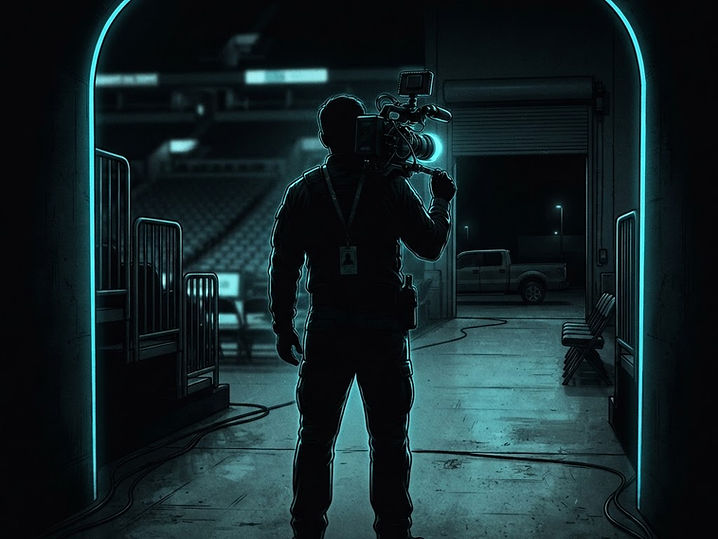
A general manager gets handed a proposal: a creator with a real NBA press credential, the kind that puts him in the locker room after a win, on the floor for warmups, and in the room when the coach answers the hard question. He can mention the dealership on camera in a credentialed setting. He can put a truck in frame under the arena lights. The ask is a season retainer and the number starts with a six.
Nobody in the building can price that. Dealer groups know what a boosted post costs. They do not know what credentialed access costs, because it is not a media buy. It is an access arrangement with a production obligation attached, and it is priced like a retainer.
This is the pricing model, the contract terms that keep it survivable, and the dashboard the GM should be reading every month.
First, be clear about what the credential is and is not
Credentials are issued to media outlets, not to brands. A working creator is usually credentialed through an outlet, a network affiliate or the team's own media process. Three consequences follow, and every one of them shows up in the contract.
The dealership cannot buy press access. It can buy a creator's time, audience and production. The moment the money looks like payment for editorial coverage, it breaches outlet ethics policy, possibly the team's media rules, and the disclosure rules that apply to paid brand content.
Paid work and editorial work have to stay separated. A credentialed creator can be paid for branded content. He cannot be paid to say something inside his outlet's game coverage. Write the separation into the contract rather than trusting everyone to remember it in April.
Team and league marks, arena footage and game action are licensed property. Broadcast-quality action, the team logo in an end card, official highlights, arena signage as a set piece: all of it has a rights holder. Your compliance review will ask, and the answer needs to exist before the flight.
So the four legitimate structures look like this.
Structure
Branded content outside editorial
- What you are buying
- His audience, his access-adjacent content, his credibility by association
- Disclosure burden
- Clear ad labeling on every paid asset
Structure
Sponsored segment inside his own show or feed
- What you are buying
- A repeating slot with a host-read
- Disclosure burden
- Verbal and written disclosure, both
Structure
Contracted game-day capture crew
- What you are buying
- Footage for your channels, no publication by him
- Disclosure burden
- None, but team approval for access and marks
Structure
Ambassador and event appearances
- What you are buying
- His presence at your store or a sponsored event
- Disclosure burden
- Disclosure where it is filmed and published
| Structure | What you are buying | Disclosure burden |
|---|---|---|
| Branded content outside editorial | His audience, his access-adjacent content, his credibility by association | Clear ad labeling on every paid asset |
| Sponsored segment inside his own show or feed | A repeating slot with a host-read | Verbal and written disclosure, both |
| Contracted game-day capture crew | Footage for your channels, no publication by him | None, but team approval for access and marks |
| Ambassador and event appearances | His presence at your store or a sponsored event | Disclosure where it is filmed and published |
The four cost lines nobody quotes separately
Creators quote a single number. Budgets break when it is the only number, because three of the four components are invisible in it.
Line item
Talent and access fee
- What it actually covers
- His time, his audience, his willingness to attach his credential to your brand
- Share of a sane budget
- 40 to 55 percent
Line item
Game-day production
- What it actually covers
- Shooter, audio, same-night edit, captions, vertical and horizontal cuts
- Share of a sane budget
- 15 to 25 percent
Line item
Rights and licensing
- What it actually covers
- Your use of the footage in paid media, whitelisting, the length of the license
- Share of a sane budget
- 10 to 20 percent
Line item
Amplification
- What it actually covers
- Media spend behind the assets you now have the right to boost
- Share of a sane budget
- 10 to 25 percent
| Line item | What it actually covers | Share of a sane budget |
|---|---|---|
| Talent and access fee | His time, his audience, his willingness to attach his credential to your brand | 40 to 55 percent |
| Game-day production | Shooter, audio, same-night edit, captions, vertical and horizontal cuts | 15 to 25 percent |
| Rights and licensing | Your use of the footage in paid media, whitelisting, the length of the license | 10 to 20 percent |
| Amplification | Media spend behind the assets you now have the right to boost | 10 to 25 percent |
The production line is where inexperienced buyers get hurt. A creator who films on a phone and edits at midnight is cheap and produces assets you cannot run as paid media. A creator with a shooter and a same-night edit costs twice as much and produces assets that survive a compliance review and a paid placement.
Rights is the second trap. A fee that covers organic posting only is not a license to advertise. If the plan is to run his footage as paid social, price the paid license at signing, not in month four when the asset is already performing.
National cost benchmarks for a season
Ranges below are 2026 market rates for a single-market dealership or dealer group buying NBA-adjacent creator content. They exclude media spend and exclude any team sponsorship.
Tier
Local credentialed creator
- Combined following
- 15,000 to 75,000
- Per-game fee
- $1,500 to $4,000
- Season, all in
- 8 to 10 home games: $18,000 to $35,000
Tier
Regional sports creator
- Combined following
- 100,000 to 400,000
- Per-game fee
- $4,000 to $9,000
- Season, all in
- 12 to 18 home games: $45,000 to $80,000
Tier
National NBA-facing creator
- Combined following
- 500,000 to 3,000,000
- Per-game fee
- $10,000 to $25,000
- Season, all in
- 20 or more games plus playoffs: $110,000 to $250,000
| Tier | Combined following | Per-game fee | Season, all in |
|---|---|---|---|
| Local credentialed creator | 15,000 to 75,000 | $1,500 to $4,000 | 8 to 10 home games: $18,000 to $35,000 |
| Regional sports creator | 100,000 to 400,000 | $4,000 to $9,000 | 12 to 18 home games: $45,000 to $80,000 |
| National NBA-facing creator | 500,000 to 3,000,000 | $10,000 to $25,000 | 20 or more games plus playoffs: $110,000 to $250,000 |
What an average NBA season of content costs. Across the credentialed middle, meaning a regional creator with genuine access committing to a full season of twelve to eighteen home games, two deliverables per game and twelve months of usage rights, the national midpoint sits near $55,000 to $70,000 all in. That figure includes production and licensing. It does not include the media budget behind the assets.
Per asset, that is roughly $1,800 to $2,300 for thirty to forty pieces of content. Assume a third of them are good enough to carry paid spend. That third is what you are really buying.
Three pricing mechanics to know before you negotiate.
- Playoff creep. A creator whose team goes deep is worth more in April than he was in October, and he knows it. Price the playoff scope as an option at signing or you will renegotiate under time pressure.
- Access scarcity. Credentialed creators are a small population in any metro. Two dealer groups bidding for the same person is the whole reason exclusivity costs money.
- Per-follower pricing is not pricing. It rewards audience size and ignores access, cadence and production quality. Negotiate deliverables and rights, then check whether the follower number is credible.
The break-even a GM actually cares about
Take the $60,000 season. At an average front-end gross of $2,400 a unit, the deal needs roughly twenty-five delivered units across the year to pay for itself. That is about two a month. Everything after that, meaning service retention, the trade it acquired, the parts and accessory attach on each delivery, is margin.
Put that sentence in the proposal. A creator deal that cannot survive that arithmetic is a sponsorship, and sponsorships get cut in the first slow quarter.
The reporting dashboard the GM should sign off on
The two-column structure is not theoretical. Our report page runs it on real posts: attention rates on one side, saves and shares on the other, with the denominator visible on every line.
Two columns, one page, monthly, with the creator's platform analytics access granted at signing. If a proposal cannot produce this, the proposal is the problem.
Column one, attention. Impressions, three-second and ten-second retention, completion rate, saves, shares, profile visits, and net follower growth filtered to your metro. Reach without the metro filter is decoration.
Column two, commerce. Sessions on your vehicle detail pages from creator links and creator UTMs, service scheduler sessions, lead forms started and submitted, tracked calls, direct messages sorted by intent, appointments booked, cost per booked appointment, units delivered, cost per delivered unit.
Supporting rows that belong on the same page, not in a separate deck.
- Editorial mentions, tracked and never promised. When he puts the dealership or the store name into his own game coverage, log it. Do not contract for it.
- Asset reuse. Which clips ran as paid, what they cost per thousand impressions, and whether they still perform in month five.
- Audience geography. Share of his engaged audience inside your drive radius. This single number explains most disappointing deals.
Cadence that does not rot. A written update under two hundred words every week. A monthly review on the dashboard above. A quarterly decision with three options on the table: keep, restructure, or end it. A creator relationship with no scheduled decision point becomes a subscription.
One rule on measurement worth stating out loud: earned media value is not a KPI. It is a number that is easy to inflate and impossible to bank. If a proposal leads with it, the proposal is avoiding column two.
What a good contract looks like
Twelve terms that decide whether this is a partnership or a monthly argument.
- Named deliverables and dates. Twelve named games, twenty-four posts, one long-form piece a month. Not best efforts.
- Flight windows. Exact publication dates and the maximum delay after a game. Twenty-four hours is the standard for event-adjacent content.
- Press separation clause. Paid content is published on his brand channels as advertising, separate from any outlet coverage. In writing, both directions.
- Disclosure. Ad labeling on every paid asset, verbal and written, to the standard the FTC sets for social endorsements.
- Rights, with a stated length. Twelve months organic, twelve months paid including whitelisting and Spark-style amplification. No perpetual worldwide grant, and no AI likeness or voice generation without a separate signed consent.
- Ownership. He keeps his footage, you license it. Or you commission and own the finished cuts. Pick one and write it; undefined ownership is the term most likely to end the relationship badly.
- Approval, with an SLA. Three business days for brand review, and a clear statement that brand review is not editorial approval. Silence is not approval.
- Exclusivity, priced. Category exclusivity in the metro with a defined radius, plus the carve-out for his own editorial work. If he wants to hand out exclusivity for free, he is not serious.
- Kill fee. Fifty percent on cancellation after the schedule is locked, full fee inside five days of a shoot.
- Termination for brand safety. Team media rule breaches, public conduct issues, and any compliance failure are grounds to end it without penalty.
- Measurement obligations. Analytics access at signing, UTM discipline on every link, monthly dashboard due five business days after month end.
- Payment structure. Half on signature, the balance monthly against delivered assets. Never the full season up front.
Red flags that read as enthusiasm
- Guaranteed press mentions. That is either a lie or an ethics problem.
- Earned media value presented as the primary return metric.
- Per-follower pricing with no deliverable count attached.
- Perpetual worldwide rights offered cheerfully at no uplift. It means the rights are worth less than he says.
- No disclosure clause anywhere in the document.
- Exclusivity given away to a competing group in the same metro, for nothing.
- No dashboard, no analytics access, and a report that arrives as a screenshot of an insights tab.
Buy one game before you buy a season
The cheap way to price all of this is a pilot: one home game, two deliverables, thirty-day organic rights, dashboard access, and a written read-out. Cost lands between $3,000 and $7,000 depending on production. You learn his cadence, whether the footage survives your compliance review, and whether his audience is actually in your metro.
Then buy the season, with the numbers on this page in front of you and the twelve terms above in the document.
Creative compliance gate
No creative reaches a flight before the manufacturer signs it off.
Every piece of creative named in this insight, including anything produced with AI assistance, clears the brand’s review before media spend, organic scheduling or event capture goes live. The four rules below are the ones that keep a campaign on its date.
- 01
Submit the asset pack, not the idea
Stills, cut-downs, captions, alt text and end cards travel together, with the intended flight dates attached. Reviews stall on packages that arrive in pieces.
- 02
Build the review into the flight date
Two to three weeks covers most OEM programs. Any clip carrying a product claim, an incentive or a co-op match needs longer, and a launch week is the wrong time to find that out.
- 03
Nothing flies unapproved
That includes the "test" post, the organic support cut and the paid boost of an organic clip. If it is public, it was published, and compliance will treat it that way.
- 04
Store the approval with the asset
Keep the sign-off reference and its expiry alongside the creative. Reusing an approved cut saves the next review; reusing an expired one restarts it.
Answer engine fuel
Questions buyers actually ask
How much does an NBA season of influencer content cost for a dealership?
For a credentialed regional creator committing to 12 to 18 home games with two deliverables per game and 12 months of usage rights, the national midpoint is roughly $55,000 to $70,000 all in, including production and licensing but excluding media spend. Local creators with smaller audiences can deliver a season for $18,000 to $35,000; national NBA-facing creators run $110,000 to $250,000.
Can a dealership pay a credentialed journalist for press mentions?
No. Press credentials are issued to media outlets, and paying for editorial coverage breaches outlet ethics policies and usually the team’s media rules. What you can buy is branded content published on his own channels, clearly labeled as advertising, kept separate from his editorial work.
What should a creator impact dashboard show?
Two columns. Attention: impressions, retention, saves, shares, profile visits and follower growth filtered to your metro. Commerce: vehicle detail page sessions, lead forms, tracked calls, appointments booked, cost per appointment, units delivered and cost per unit. Editorial mentions are logged but never contracted.
What rights should a season contract include?
Twelve months of organic posting plus twelve months of paid usage including whitelisting, with no perpetual grant and no AI likeness or voice generation without a separate consent. Price the paid license at signing; it is the line most often left out.
What is the safest way to test a sports creator before a full season?
Buy a single-game pilot: one home game, two deliverables, 30-day organic rights and dashboard access for $3,000 to $7,000. It establishes his cadence, whether the footage clears compliance review, and whether his audience sits inside your drive radius.
Primary sources
Filed under Strategy
More from this desk →Read next
Hire the designer who can code, or rent one forever
A static mockup cannot carry behavior, state or latency, so somebody guesses, and somebody reworks. The hybrid designer-developer is the cheapest form of certainty on the roster, and almost nobody is paying for it properly.
StrategyThe program, not the pep talk: internal enablement that survives a staff change
Argued already that a tool is nothing without the education to guide it. This is the build: a role map, a one-page SOP format, a 30/60/90 training ladder and the vendor support terms that make it stick.