The ninety-day reopening: how a renovated dealership becomes local news instead of a Saturday
A reopened building is genuine local news for about six weeks. Here is the ninety-day arc, the radio remote and newspaper supplement plan that carries it, the budget shape, and the measurement spine that makes traditional media defensible.
Manifold Studio · automotive search & data
Audio briefing
Listen to this insight
Extraction-ready summary
- Treat a reopening as a news event with a ninety-day on-ramp, not a single Saturday: hard hat tour at T-90, opening coverage at T-0, human-interest follow-up at T+30.
- Local radio remotes, the newspaper news story plus a paid supplement, a television morning live shot and arterial or hoarding boards are the load-bearing channels, because they reach the buyer who is not searching yet; digital only captures the demand they create.
- The press story and the paid advertorial are different products: pitch the news desk with investment, jobs and a date, and buy the supplement separately for photography, offer and coupon.
- Traditional media has to be measured by design: one tracking number per station, one promo code per page, one vanity URL per channel, a pre and post branding search comparison against a control metro, and a pre-open awareness panel.
- Roughly half the budget belongs in traditional and community channels, with the spend front-loaded into the first thirty days, because earned coverage decays in about six weeks.
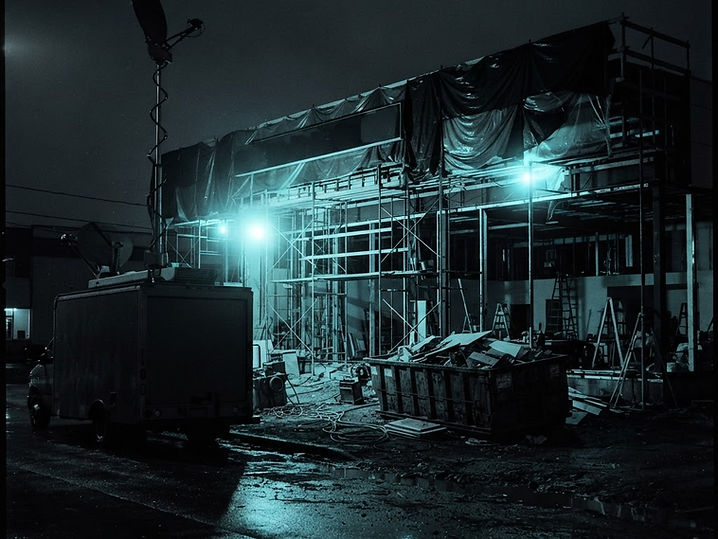
Eighteen months behind scaffolding. Then a Saturday where the wraps come off and the building is supposed to be the story.
Most dealership reopenings spend the whole budget on that Saturday. A tent, a band, a balloon arch, a digital buy that reached forty thousand people who will never drive past the store. Then the following Monday is quieter than the Monday before. The building changed and the market did not notice.
The reopenings that work are treated as a news event with a ninety-day on-ramp, not a party with a date. And the load-bearing element of that event is local media: the radio, the newspaper, the television morning show and the boards on the arterial. Those channels are what make a community understand that a building it has driven past for two decades has been replaced, and they reach the buyer who is not searching for anything yet.
This is the sequence, the channel plan, and the measurement that has to exist before the first dollar of traditional media goes out.
Before anything else: the three constraints
The date is a promise you cannot afford to break. A reopening announced and then moved is a story about construction delays. Set the date when the certificate of occupancy and the sign permit are both genuinely in hand, not when the contractor is optimistic.
Manufacturer image and co-op rules govern the creative. Facility standards dictate signage, brand marks, and often which signage may be covered during the project. Co-op approval for reopening creative has a lead time measured in weeks, and a "grand reopening" claim typically needs brand sign-off. Get that approved before the newspaper sells you a supplement.
Service continuity is the actual reputation risk. Customers forgive a torn-up showroom. They do not forgive a service drive that moved without being told. The reopening campaign starts with an email to every owner in the database explaining exactly where to drop a car for the next four months, and it runs through the whole build.
The ninety-day arc
Window
T-120
- What is happening
- Date locked, co-op and brand approval filed, sign permit confirmed, local media list built
- What it produces
- A fixed date and a legal runway
Window
T-90
- What is happening
- Hard hat tour offered to two local outlets, before-state photography shot to brand image standard, radio remotes and TV live shot held for opening week, arterial boards booked
- What it produces
- Two earned stories instead of one, and inventory that does not exist later
Window
T-60
- What is happening
- Newspaper supplement drafted, press kit assembled, owner database segmented, opening-week staffing plan written
- What it produces
- Assets that pass review without a scramble
Window
T-30
- What is happening
- Embargoed release to five outlets, media day invitations out, VIP night list confirmed, radio schedule live
- What it produces
- A press list that answers its phone
Window
T-14
- What is happening
- Full-finish photography and video for brand compliance, final walkthrough, staff script and training
- What it produces
- The image library that carries the next twelve months
Window
T-7
- What is happening
- Boards flip to the date, reminder calls to press, teaser on every owned channel
- What it produces
- A countdown rather than a surprise
Window
Opening week
- What is happening
- Media day live shot, chamber ribbon cutting, two weekend radio remotes, event staffing, capture crew on site
- What it produces
- Earned coverage, attendance, and footage
Window
T+7 to T+30
- What is happening
- Amplify the earned coverage as paid, publish the follow-up stories
- What it produces
- A second and third news cycle
Window
T+60 to T+90
- What is happening
- Readout against the pre-open baseline
- What it produces
- A decision, not a memory
| Window | What is happening | What it produces |
|---|---|---|
| T-120 | Date locked, co-op and brand approval filed, sign permit confirmed, local media list built | A fixed date and a legal runway |
| T-90 | Hard hat tour offered to two local outlets, before-state photography shot to brand image standard, radio remotes and TV live shot held for opening week, arterial boards booked | Two earned stories instead of one, and inventory that does not exist later |
| T-60 | Newspaper supplement drafted, press kit assembled, owner database segmented, opening-week staffing plan written | Assets that pass review without a scramble |
| T-30 | Embargoed release to five outlets, media day invitations out, VIP night list confirmed, radio schedule live | A press list that answers its phone |
| T-14 | Full-finish photography and video for brand compliance, final walkthrough, staff script and training | The image library that carries the next twelve months |
| T-7 | Boards flip to the date, reminder calls to press, teaser on every owned channel | A countdown rather than a surprise |
| Opening week | Media day live shot, chamber ribbon cutting, two weekend radio remotes, event staffing, capture crew on site | Earned coverage, attendance, and footage |
| T+7 to T+30 | Amplify the earned coverage as paid, publish the follow-up stories | A second and third news cycle |
| T+60 to T+90 | Readout against the pre-open baseline | A decision, not a memory |
Two news cycles are available in a renovation and most dealers use neither well. The first is the hard hat tour at T-90: "this dealership is spending eleven million dollars and adding thirty jobs." The second is the opening itself. The third, if you are organized, is the human one at T+30: the technician who has been in that shop for twenty-two years now working in a new one.
Local media is the center of the plan, not the courtesy line
Digital buys reach people who are already in market. Traditional local media reaches the person who is not, and a reopened building is news to exactly that person. The four channels do different jobs and are bought for different reasons.
Local radio: the remote is the participation
Radio is where a dealer event gets a body count. The buy that matters is not the thirty-second spot, it is the live remote: a station parked in your lot on the Saturday, a personality broadcasting from the new showroom, a reason for people to drive over and look.
- Book remotes on the two strongest event days, not one. Saturday and the following Saturday, or Saturday and the weekday evening drive.
- Buy the drive-time schedule for the four weeks around the open, not the opening weekend alone. The commute is the habit you are trying to interrupt.
- Negotiate the remote as inventory, not as an add-on. Remotes with a station that has a genuine local morning show are worth more than a larger spot schedule with no presence.
- Give the station something to talk about. A giveaway tied to a test drive, a technician interview, a vehicle from the new model year on site. A remote with nothing happening is dead air in a parking lot.
The local newspaper: the story and the supplement are different products
This is the distinction dealers blur and then complain about. The news desk may write about your reopening because it is a business story with jobs and investment attached. That coverage is free and cannot be bought. The supplement or advertorial is paid, clearly labeled, and reaches the reader with your photography and your message on a page they actually hold.
- Pitch the news desk with numbers, not adjectives. Investment, square footage, headcount added, a date, and the name of a person who will answer questions.
- Buy the supplement for the photography and the offer. A four-page reopening section with a vehicle line-up, service pricing and a coupon tied to a code is a measurable object. A quarter-page "we're back" ad is not.
- The older buyer in your market reads it. The newspaper reader is the customer with equity, a service relationship and a habit of reading the local business page. That is a trade cycle, not a vanity audience.
- Ask for the digital edition and the email placement in the same negotiation. Local papers will bundle it, and it is the cheapest reach you will buy that week.
Local television: give them pictures
Local TV does not cover press releases. It covers things that produce a picture: a building, a live shot, a person, a ribbon.
- Offer the morning show a live shot from inside the new showroom. Six in the morning from a lit showroom with a vehicle on the turntable and a manager answering questions beats any scripted spot you could buy in that hour.
- Buy the weather or traffic sponsorship for four weeks. It is inexpensive, it sits inside a program the whole market watches at the same time, and it is the closest thing local television has to a fence around the commute.
- Lead with the jobs and the apprenticeship. A dealership adding technical apprentices is a local employment story, and employment stories are what local newsrooms have space for.
- Have a spokesperson who can do ninety seconds without a script. Not the marketing manager. Someone who can talk about the business and the town.
Outdoor and street level: the only channel that talks to the commute
A renovation gives you a rarity: eighteen months of permission to be interesting on a piece of road.
- Wrap the construction hoarding with the reopening date. It converts a liability into a countdown and it is the cheapest square footage you will ever own.
- Book two arterial boards facing the traffic that actually passes the store. Not the interstate. The road your service customers take.
- Flip the boards on the announced date. Teaser for four weeks, then the date, then the offer. A board that says the same thing for twelve weeks is furniture.
Community institutions: the part that is not a media buy
The chamber of commerce ribbon cutting, the high school athletics sponsorship, the charity vehicle, the local fire department open day in your lot. None of it is measurable at the click level and all of it is why a local business gets treated as local.
The budget shape
Percentages, because the dollar figure depends on the volume of the store. Model it on a mid-size rooftop reopening with roughly $85,000 of marketing spend across the arc.
Line
Local radio, including two remotes
- Share
- 22%
- What it buys
- Drive-time reach, event attendance
- How it is measured
- Unique tracking number per station
Line
Newspaper, story plus supplement
- Share
- 12%
- What it buys
- Older high-equity buyer, trade and service coupon
- How it is measured
- Coupon code per page
Line
Local television, incl. weather sponsorship
- Share
- 11%
- What it buys
- Mass simultaneous reach, live shot credibility
- How it is measured
- Vanity URL plus call tracking
Line
Outdoor and site hoarding
- Share
- 10%
- What it buys
- The actual commute, for eighteen months
- How it is measured
- Direction-request and walk-in counts
Line
Digital, search and social
- Share
- 20%
- What it buys
- Capture the demand the traditional buy creates
- How it is measured
- Standard platform attribution
Line
Owner database, email and SMS
- Share
- 12%
- What it buys
- Service retention across the disruption
- How it is measured
- RO counts by segment
Line
Event production, VIP night, staffing
- Share
- 10%
- What it buys
- Attendance and content capture
- How it is measured
- RSVP, attendance, coverage count
Line
Contingency
- Share
- 3%
- What it buys
- The date that moves, the coverage that lands
- How it is measured
- Nothing. It is insurance
| Line | Share | What it buys | How it is measured |
|---|---|---|---|
| Local radio, including two remotes | 22% | Drive-time reach, event attendance | Unique tracking number per station |
| Newspaper, story plus supplement | 12% | Older high-equity buyer, trade and service coupon | Coupon code per page |
| Local television, incl. weather sponsorship | 11% | Mass simultaneous reach, live shot credibility | Vanity URL plus call tracking |
| Outdoor and site hoarding | 10% | The actual commute, for eighteen months | Direction-request and walk-in counts |
| Digital, search and social | 20% | Capture the demand the traditional buy creates | Standard platform attribution |
| Owner database, email and SMS | 12% | Service retention across the disruption | RO counts by segment |
| Event production, VIP night, staffing | 10% | Attendance and content capture | RSVP, attendance, coverage count |
| Contingency | 3% | The date that moves, the coverage that lands | Nothing. It is insurance |
Two things worth saying plainly. First, this is a plan where nearly half the money sits in channels your dashboard cannot attribute by click, which is why the measurement section below is not optional. Second, direct mail is not on this list. A saturated mailer about a building does the same job as a newspaper supplement, worse, at higher cost, with no way to see who received it. Local print earns its place because the reader chose to pick it up.
Measuring traditional participation honestly
You cannot click-attribute a radio remote. You can build a measurement spine that makes the spend defensible, and it has to exist before the buy.
- One unique tracking number per station and per outlet. Never one number for all radio. When the phone rings, you know which remote produced it.
- One promo code per page, per station, per board. Printed, spoken and pinned in the showroom. Redemption is the cleanest traditional-media signal a dealer has.
- One vanity URL per channel. Redirect it to a reopening landing page that captures the source in the first session.
- "How did you hear" asked at the delivery desk and typed into the CRM. The oldest metric in the business and still the only one that closes the loop. Audit it, because staff default to the easiest answer.
- Branded search lift, pre and post, against a matched control metro. Pull branded query volume in your metro for eight weeks before the open and eight weeks after, and compare it to a comparable market where nothing changed. That delta is the awareness effect of the traditional buy, and it is the number to put in front of a general manager.
- A pre-open awareness panel. Two hundred to three hundred respondents in your drive-time polygon, surveyed four weeks before and six weeks after. Cheap, and it answers the question every dealer skips: did anyone notice.
- Walk-ins and service ROs by day, against the same weeks last year. A reopening should show a step change in both, not just a spike on the Saturday.
Read it at T+30 and T+90. Coverage decays in about six weeks, which is why the budget sits early and the amplification happens inside the first thirty days. A reopening readout at month five is a post-mortem.
The press kit, assembled at T-60
- One page of facts: investment, square footage, jobs added, date, hours, service drive location during the build.
- Six photographs at brand image standard: exterior, showroom, service reception, drive-through, a technician at work, a vehicle on the turntable.
- Two 30-second vertical videos and one 90-second horizontal cut, no music licensing problems.
- A named spokesperson with a mobile number, and a second name for the weekend.
- The event schedule to the hour, including when the ribbon is cut, because that is the shot.
- B-roll folder with a download link that works on a phone.
Send it embargoed to five outlets, follow up by phone once, and never send it as an attachment over ten megabytes.
Errors that flatten the whole thing
- Announcing a date before occupancy and signage are confirmed. The only story worse than no story is a delay.
- Pressing the news desk and the sales department with the same message. If the coverage reads like an advertisement, no one runs it twice.
- Booking remotes for the opening Saturday only. The second weekend is when the neighbours who were busy actually come.
- Skipping the brand image shoot at full finish. That photography has to carry your website and listings for a year.
- One tracking number for everything. It converts a measurable traditional buy into an argument about faith.
- Spending 70 percent on the weekend and nothing on the thirty days after. The earned coverage needs amplification while it is still being read.
- Inviting twelve outlets and staffing for three. Local media remember being handled badly for a decade.
- Letting the service drive move quietly. No amount of radio fixes a customer who arrived to find the bay gone.
A reopening is one of the few moments when a dealership is genuinely news. Treat the building as the story, the local media as the distribution, and the measurement spine as the price of admission, and the Saturday becomes the start of a quarter instead of the end of a project.
Creative compliance gate
No creative reaches a flight before the manufacturer signs it off.
Every piece of creative named in this insight, including anything produced with AI assistance, clears the brand’s review before media spend, organic scheduling or event capture goes live. The four rules below are the ones that keep a campaign on its date.
- 01
Submit the asset pack, not the idea
Stills, cut-downs, captions, alt text and end cards travel together, with the intended flight dates attached. Reviews stall on packages that arrive in pieces.
- 02
Build the review into the flight date
Two to three weeks covers most OEM programs. Any clip carrying a product claim, an incentive or a co-op match needs longer, and a launch week is the wrong time to find that out.
- 03
Nothing flies unapproved
That includes the "test" post, the organic support cut and the paid boost of an organic clip. If it is public, it was published, and compliance will treat it that way.
- 04
Store the approval with the asset
Keep the sign-off reference and its expiry alongside the creative. Reusing an approved cut saves the next review; reusing an expired one restarts it.
Answer engine fuel
Questions buyers actually ask
How far ahead should a dealership plan a renovation reopening?
One hundred twenty days for the date, brand co-op approval and sign permits, then a staged arc: hard hat tour at ninety days out, press kit and supplement at sixty, embargoed release at thirty, boards and reminders in the final week, and amplification plus readout across the ninety days after.
Do local newspapers and radio still work for a dealership reopening?
Yes, and they are the channels most likely to reach the buyer who is not searching yet. Radio remotes put attendance in the lot, the newspaper reaches the high-equity reader with an existing service relationship, local television delivers a mass simultaneous audience, and arterial boards talk to the actual commute.
How do you measure traditional media with no click attribution?
Build the spine before the buy: a unique tracking phone number per station, a unique promo code per page or board, a vanity URL per channel, how-did-you-hear captured at delivery, branded search lift compared against a matched control metro, and a pre and post awareness panel of two to three hundred respondents inside the drive-time polygon.
What should be in a dealership reopening press kit?
One page of facts covering investment, square footage, jobs added, date and hours, six brand-standard photographs, two vertical and one horizontal video, a named spokesperson with a mobile number, the event schedule to the hour including the ribbon cut, and a B-roll folder that downloads on a phone.
How long does reopening coverage last?
About six weeks. That is why the budget is front-loaded into the first thirty days after opening and why the earned coverage is amplified as paid media while it is still being read rather than three months later.
Filed under Strategy
More from this desk →Read next
Hire the designer who can code, or rent one forever
A static mockup cannot carry behavior, state or latency, so somebody guesses, and somebody reworks. The hybrid designer-developer is the cheapest form of certainty on the roster, and almost nobody is paying for it properly.
StrategyThe program, not the pep talk: internal enablement that survives a staff change
Argued already that a tool is nothing without the education to guide it. This is the build: a role map, a one-page SOP format, a 30/60/90 training ladder and the vendor support terms that make it stick.